


SuperLight Photonics - Cees Links
Dec 22, 2025
The University of Twente is celebrating 60 years of Applied Mathematics. How is this related to SuperLight Photonics and our wishes for the holiday season?
As the year comes to an end, December offers its usual invitation to pause. We look back at what changed, what challenged us, and what surprised us. Some of the surprises are amusing in hindsight.
Cees Links, our CEO, was recently invited to talk at the Twente University as alumnus Applied Mathematics, for the celebration of 60 years Applied Mathematics. Cees looks back at his student years and how Applied Mathematics influenced society. His speech reflects our holiday spirit and wishes for 2026.
Walk down memory lane
Looking back sixty years, one sound still symbolizes the early days of computing: the punch-card reader feeding code into a machine. Hundreds of cards rattling through with that rhythmic hop-hop-hop. If there was one mistake, you found the faulty card, replaced it, and fed the entire stack back in, again and again.

It is amusing to imagine how many punch cards a system like ChatGPT would require today. A warehouse? A city? It gives perspective on the astonishing arc of technological progress.
Those punch-card readers and screeching line printers (an impressive 150 lines per minute!) were quietly announcing the end of the mechanical era. When the Computer Centre in the Twente University building opened, it was designed on the assumption that computers would grow ever larger. The reverse happened: the Computer Centre eventually shrank into every individual’s pocket.
And yet, ironically, we now build hyperscale data centres so enormous that traditional university buildings could fit inside them. It is a reminder that the future is unpredictable, and perhaps that mathematicians have always struggled a bit with physical scale and with forecasting the downstream effects of their work.
Applied Mathematics as backbone of innovation
In the early years of Applied Mathematics, a running joke claimed that “real” applied mathematics was done in Electrical Engineering, Mechanical Engineering, Physics, and other “large” disciplines. The joke conveniently overlooked that Applied Mathematics quietly underpinned the mathematical education of nearly every engineering and science program, forming foundational knowledge across the university. In that way, its influence exceeded student headcount.
Chaos theory as our guideline
The intellectual evolution of Applied Mathematics mirrors the evolution of technology. For decades, most applied mathematics concerned systems that were linear - systems for which equations could be solved cleanly. Yet nature is filled with non-linearity and chaos: weather patterns, biological processes, economic fluctuations. Small differences in initial conditions can produce dramatically different outcomes. Chaos theory reminded us that nature rarely behaves like the tidy systems in textbooks. Applied Mathematics became a gateway into that richer reality.
GIGO effect
As computing matured, society encountered a dramatic transition: the move from data to information. Computers stopped acting primarily as calculators and instead became collectors of digital records. Data accumulated faster than anyone imagined, soon becoming a “data deluge.” The central challenge was no longer obtaining data but extracting usable information.
This gave rise to new programming languages built around querying - SQL turned “data retrieval” into a discipline - and enabled organizations to make faster and more rational decisions. Information became currency. But the hard lesson appeared quickly: errors in data produce erroneous information. The phrase “garbage in, garbage out” became unavoidable.
Today we face something similar, but larger: we now struggle with an information deluge. Search engines return tens of thousands of results, but only a handful matter. The central problem is no longer access, it is filtering. This explains the excitement around modern AI. The real breakthrough is not “intelligence” but assistance in navigating overwhelming information and accelerating the next conceptual jump: from information to knowledge.
From information to knowledge
Transforming information into knowledge raises difficult questions. Is what AI produces truly knowledge? And how can we detect mis-knowledge?
The old warning still applies: garbage in, garbage out. The internet contains plenty of misinformation, and AI systems learn from it. So who determines what counts as “garbage”? Perhaps true intelligence lies in distinguishing signal from noise, yet that judgment is cultural, political, even philosophical. These debates are not new, they echo ancient questions about truth, doubt, and human understanding.
As technology advances, its social consequences reappear in new guises. Throughout history, innovations that improved society overall often displaced established roles. Today, computers outperform humans in interpreting radiological scans - faster, with fewer mistakes. This is good news for global healthcare access: scaling human expertise to every corner of the world would require decades and enormous training capacity. Yet it also means redefining professional identities.
We have always held technology to higher reliability standards than humans. We say “To err is human”, yet one technological error invites distrust. Some statistics suggest autonomous aircraft could outperform pilot-controlled aircraft because since more accidents are caused by pilot error than by mechanical failure. Would we willingly board a pilot-less plane? Statistics may reassure, but instinct resists. The same dynamics appear in self-driving cars: safer in aggregate, but still viewed with suspicion.
Innovation distrust
History shows the pattern clearly. Two centuries ago, train speeds were considered biologically unsafe for humans. A century ago, elevators relied on lift operators, because stepping into a moving box without human supervision felt unthinkable. Today, the idea sounds absurd, but imagine how many lift operators we would need if nothing had changed.
What remains beyond wisdom
And so, in 2025, as we look at sixty years of Applied Mathematics, we can see a consistent trajectory: a transition from computing, to data, to information, to knowledge, accompanied by social unease or even turbulence at every stage. The evolution has been far from linear: rich in complexity, resistance, and unintended consequences. Technology transforms both the macro-level of civilization and the micro-level of personal lives.
The open question is: what comes next?
After a data deluge and an information deluge, will we experience a knowledge deluge? What would that even look like? How does accumulated knowledge become genuine understanding? And when does understanding turn into wisdom? Beyond wisdom, what remains?
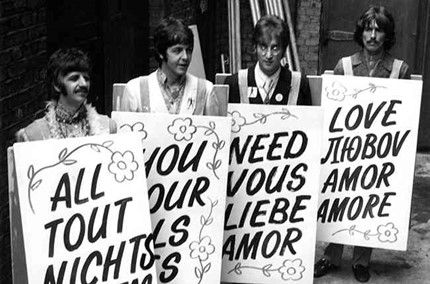
These questions feel contemporary, yet they are ancient. Humans have always wondered what it means to “know everything.” Popular culture from sixty years ago expressed the same anxieties and aspirations. The Rolling Stones complained: “I try and I try and I try and I try.” The Beatles reminded the world: “There’s nothing you can know that isn’t known,” and, more importantly, “All you need is love.”
Perhaps this is the message that endures: without love, knowledge becomes empty.
Innovate boldly – help society wisely
So as we celebrate sixty years of Applied Mathematics, we celebrate more than academic progress. We celebrate a discipline that helped move the world from mechanical computation to digital infrastructure, from data-processing to information analysis, and now from information saturation toward knowledge-making. We can be proud, both as contributors and as witnesses.
The next sixty years will belong to a generation that faces the same paradox we faced: innovate boldly, but help society adapt wisely.
And along the way, one simple instruction remains timeless:
Love what you are doing. Thank you.
Cees Links